
Emerging Travel Technologies at HITEC 2026: The Future of Hospitality Is Here
HITEC 2026 travel technologies
hospitality technology 2026, emerging travel technology, hotel technology trends, AI in hospitality, smart hotel rooms, travel automation, hotel robotics, IoT in travel
hitec-2026-travel-technologies
Discover the emerging travel technologies highlighted at HITEC 2026, from AI and smart hotels to robotics, IoT, automation and connected guest experiences.
HITEC 2026 showcased how AI, robotics, IoT, automation and connected platforms are transforming hotels and the future of travel. Here are the biggest trends to watch.
Emerging Travel Technologies at HITEC 2026: What Travelers Need to Know
What will your next hotel stay look like?
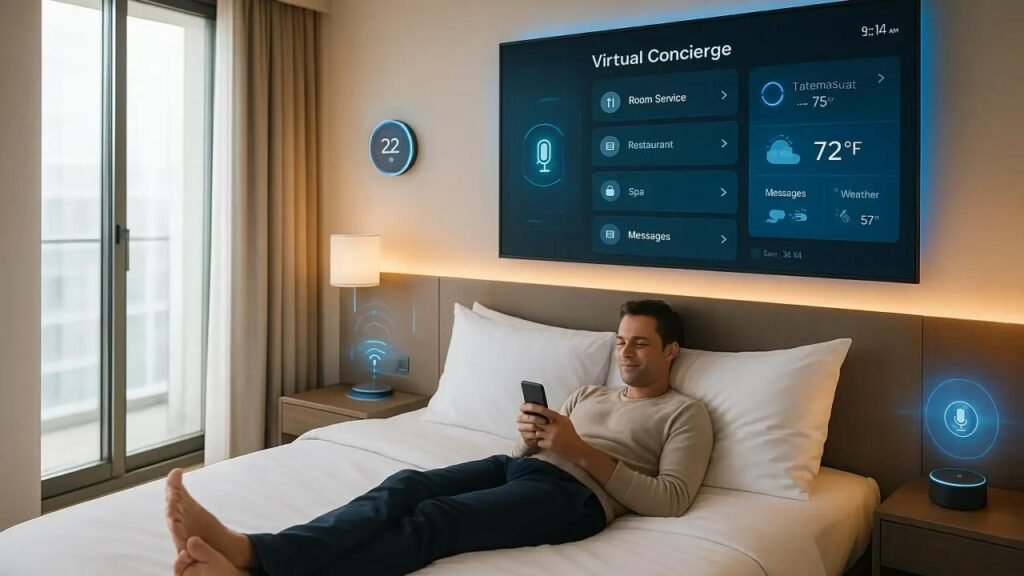
Imagine arriving at a hotel where your room already knows your preferred temperature, lighting and entertainment settings. Your smartphone acts as your room key, an AI assistant answers your questions instantly, and a robot delivers your room-service order.
This may sound futuristic, but HITEC 2026 demonstrated that many of these technologies are moving rapidly from concept to practical hospitality applications.
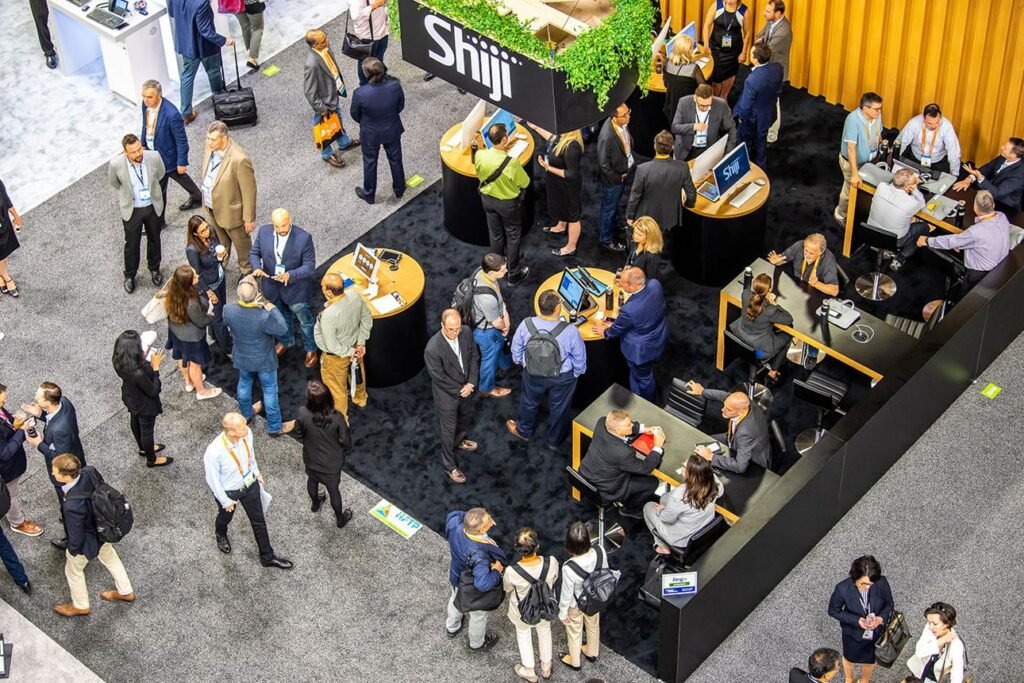
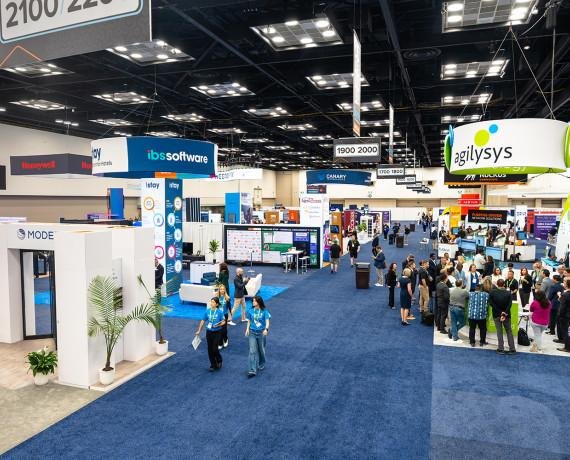
The 2026 Hospitality Industry Technology Exposition and Conference (HITEC), held June 15–18 in San Antonio, Texas, brought together thousands of hospitality professionals and technology companies to explore the next generation of hotel and hospitality technology.
And there was one major takeaway: the future of travel is becoming increasingly connected, intelligent and automated.
What Was HITEC 2026 All About?
HITEC is produced by Hospitality Financial and Technology Professionals (HFTP) and is one of the world’s leading hospitality technology events.
The 2026 conference took place at the Henry B. González Convention Center in San Antonio and featured hundreds of hospitality technology exhibitors, educational sessions and demonstrations covering everything from artificial intelligence and payments to hotel operations, connectivity and guest technology.
But HITEC 2026 wasn’t simply about introducing more gadgets.
The bigger story was integration.
Hospitality technology is increasingly connecting property management systems, guest messaging, revenue management, payments, access control, in-room technology, business intelligence and other hotel systems into more intelligent workflows.
For travelers, that could eventually mean fewer frustrating processes and more personalized experiences.
Here are some of the biggest emerging travel technologies highlighted around HITEC 2026.
1. Artificial Intelligence Is Becoming the Brain Behind Hospitality
Artificial intelligence was arguably one of the biggest themes surrounding HITEC 2026.
However, the most interesting applications weren’t necessarily futuristic humanoid robots or science-fiction-style hotels.
Instead, AI is increasingly being integrated into everyday hotel operations.
Hotels can use AI to help with tasks such as:
- Answering guest questions
- Managing guest messages
- Analyzing reservation calls
- Supporting room assignments
- Identifying revenue opportunities
- Translating content
- Processing information
- Automating repetitive administrative tasks
- Providing employees with recommendations
- Personalizing guest interactions
This represents an important shift.
Instead of AI existing as a separate tool, it is increasingly being embedded directly into the systems hotel employees already use.
What does this mean for travelers?
The potential benefit is simple: faster and more personalized service.
Instead of waiting for a staff member to answer a routine question, an AI-powered hospitality assistant could provide an immediate response.
For example:
“What time does breakfast start?”
“Can I request a late checkout?”
“Where is the nearest airport?”
“Can you recommend a restaurant nearby?”
AI-powered guest messaging could potentially answer these questions instantly while allowing human employees to focus on more complex guest needs.
2. Smart Hotel Rooms Are Getting Smarter
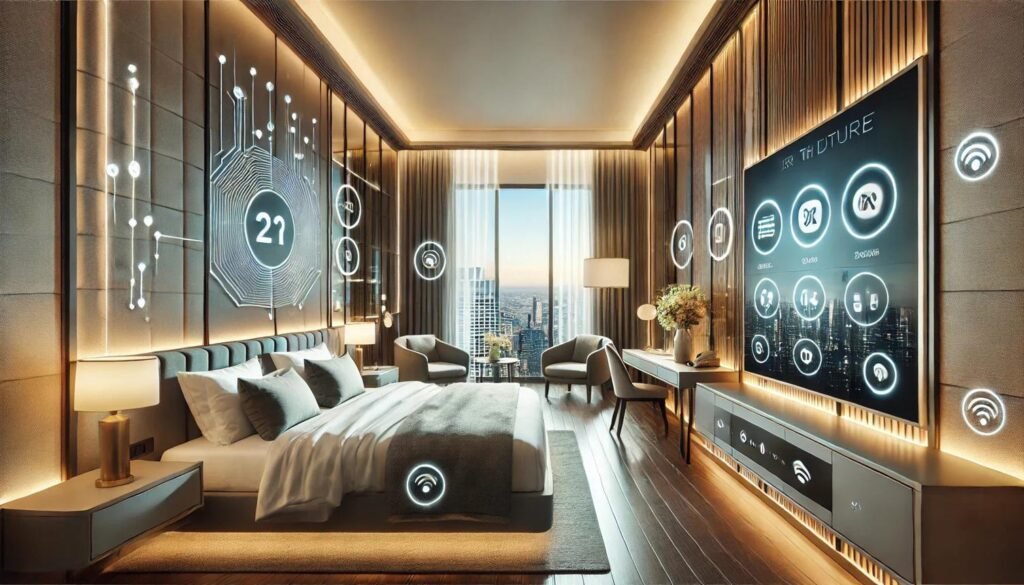
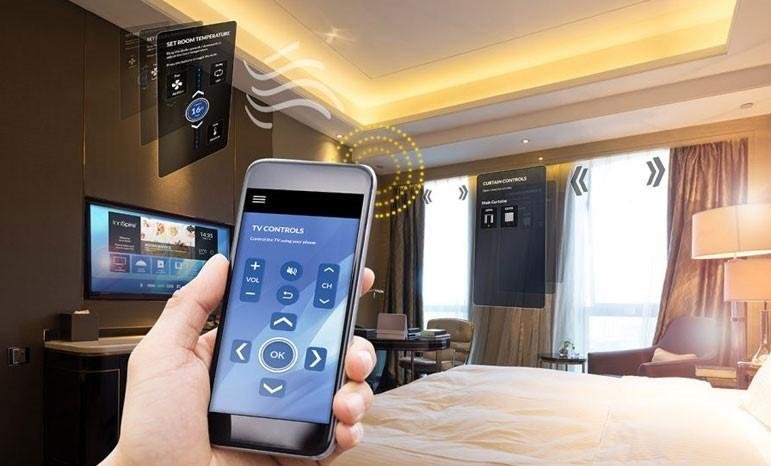
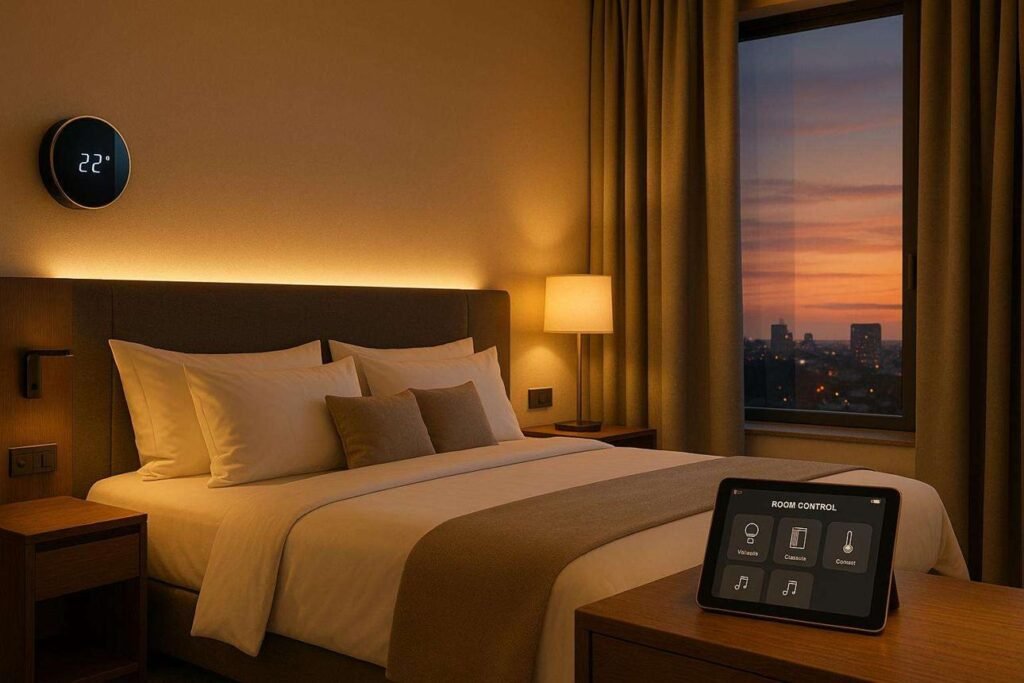
The smart hotel room is another important part of the future of hospitality technology.
Imagine entering your hotel room and finding that the environment automatically adjusts to your preferences.
Smart-room technology can connect devices such as:
- Lighting
- Thermostats
- Smart TVs
- Curtains and blinds
- Door locks
- Voice assistants
- Sensors
- Energy-management systems
The goal is to create a more seamless experience while potentially improving operational efficiency.
For example, connected sensors could help hotels understand when rooms are occupied or vacant, allowing systems to manage lighting and temperature more efficiently.
Meanwhile, mobile access and connected room technology can reduce friction between check-in and entering the room.
The traveler benefit
Instead of spending several minutes figuring out unfamiliar controls, the room could increasingly become an extension of your digital profile.
Your preferred settings could eventually follow you from property to property—subject to the hotel’s systems, privacy policies and your consent.
That’s an important distinction because personalization must be balanced with privacy and data security.
3. Robotics Could Transform Hotel Services
Robotics is no longer purely a science-fiction concept in hospitality.
At HITEC 2026, robotics companies demonstrated how autonomous machines can support hotel operations.
One example was Richtech Robotics, which showcased its AI-powered ADAM food and beverage service robot and DUST-E S autonomous cleaning solution at the event.
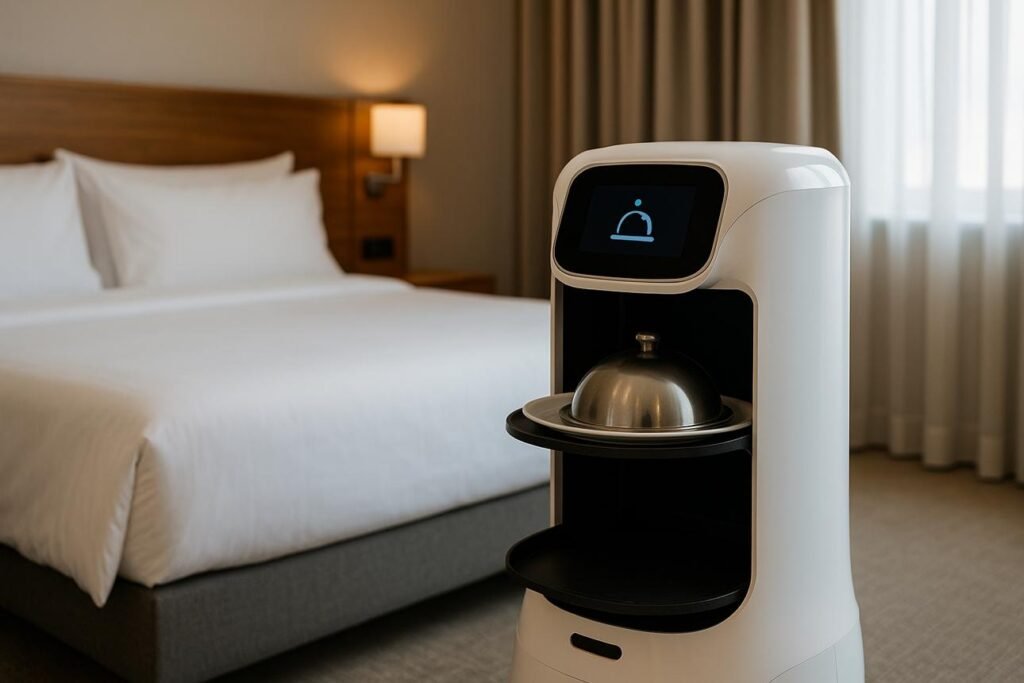
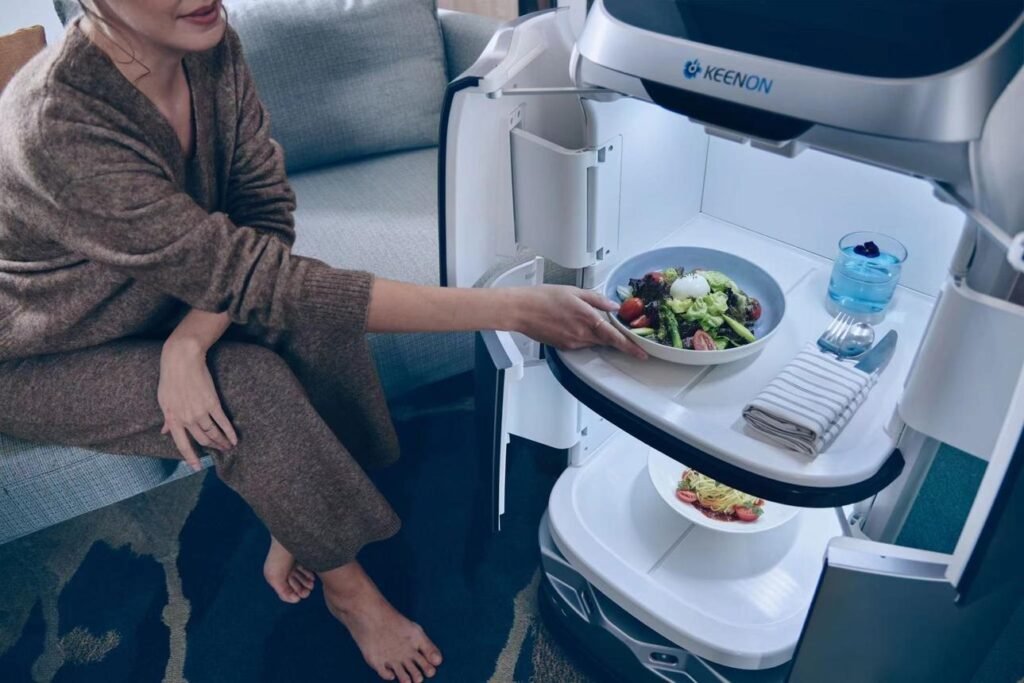
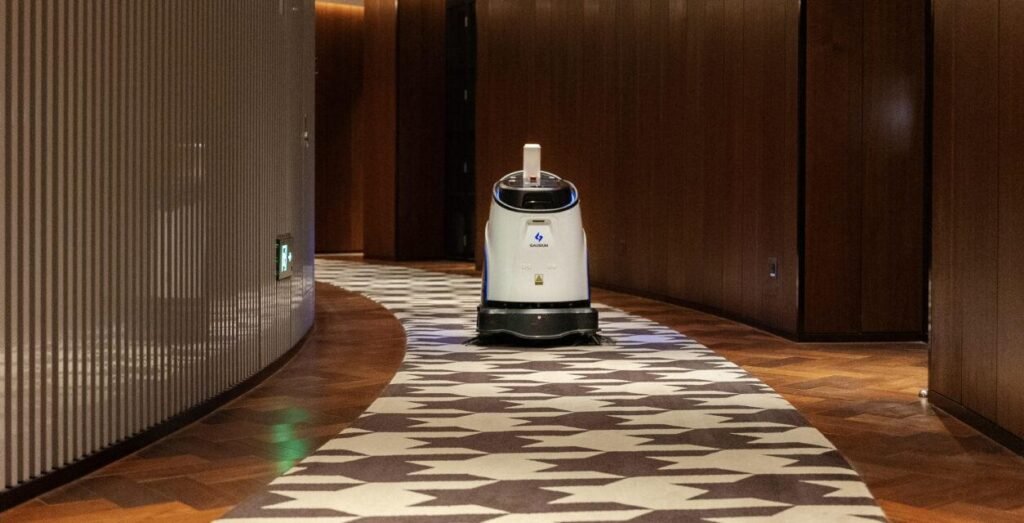
Potential applications for hospitality robots include:
- Room-service delivery
- Food and beverage service
- Cleaning
- Luggage assistance
- Inventory movement
- Concierge support
- Routine transportation of supplies
The objective isn’t necessarily to eliminate human hospitality.
Instead, automation can take over repetitive or physically demanding tasks, allowing employees to spend more time interacting with guests.
A future hotel arrival might look like this:
You check in through your smartphone.
Your digital key unlocks your room.
An AI assistant answers your questions.
A robot delivers your requested amenities.
Meanwhile, hotel employees remain available for the situations where human interaction matters most.
That combination could become one of the defining characteristics of future hospitality.
4. Virtual Reality Could Change How We Choose Destinations
Have you ever booked a hotel or attraction based on beautiful photographs only to discover that the reality wasn’t quite what you expected?
Virtual reality (VR) could help reduce that uncertainty.
Immersive technology allows travelers to experience digital representations of destinations, hotels and attractions before making a booking.
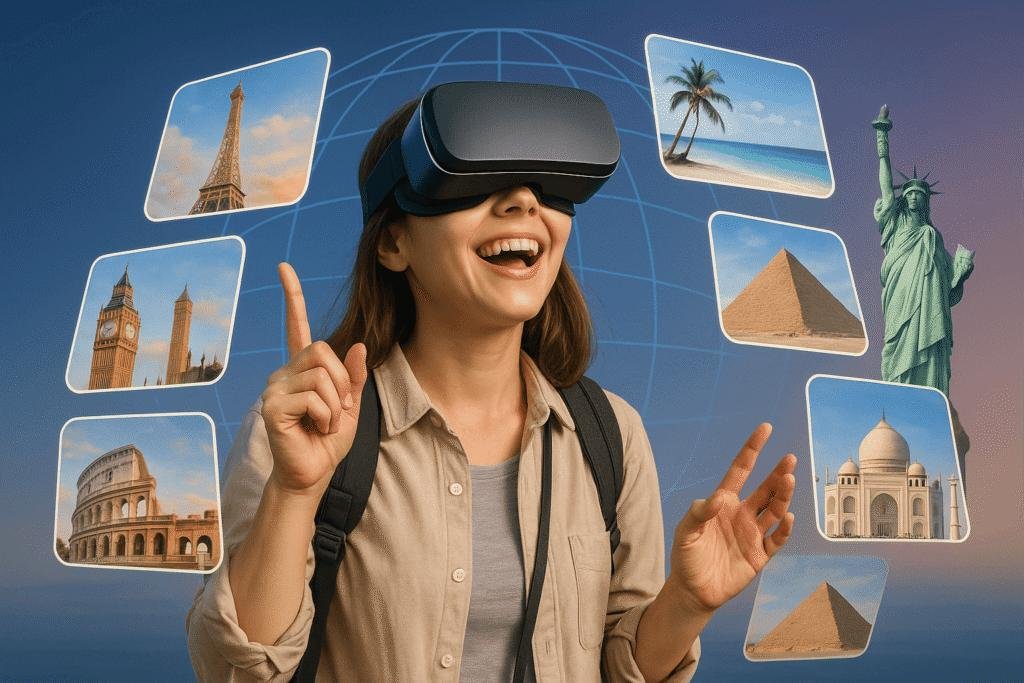
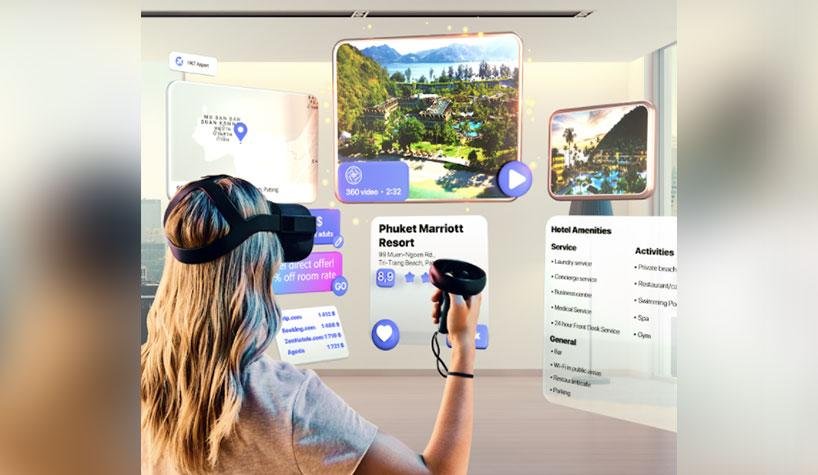
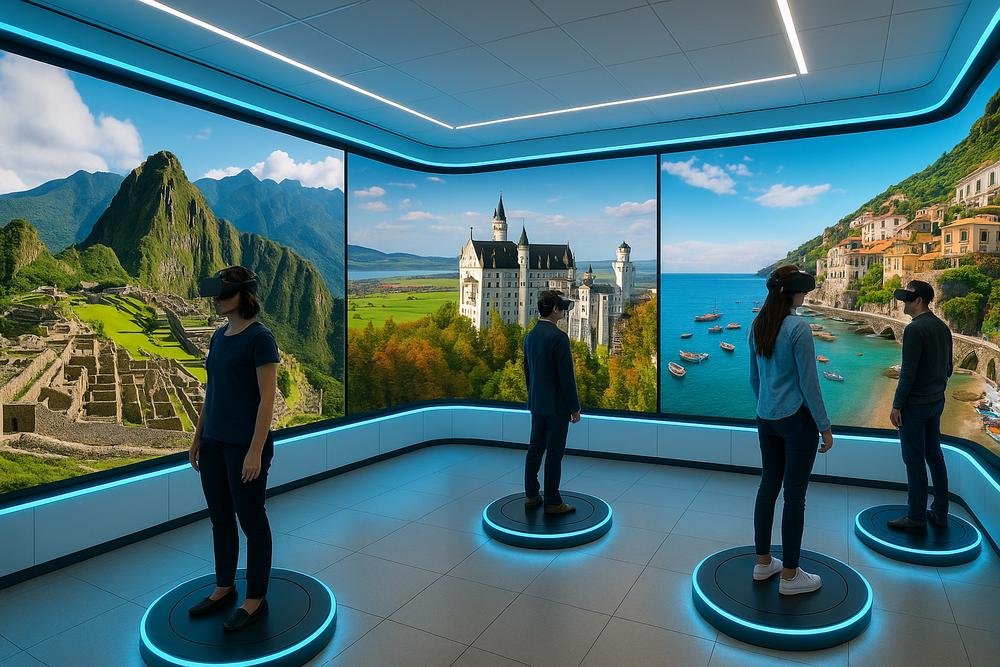
Imagine being able to:
- Walk through a hotel room virtually
- Explore a resort before booking
- Preview a cruise ship
- Tour a museum
- Experience an attraction
- Explore a destination
- Compare accommodation options
For travelers, this could make travel planning more visual and interactive.
For hotels and tourism businesses, VR could become another way to showcase experiences and differentiate their properties.
VR isn’t just about entertainment
The technology could also help travelers make more informed purchasing decisions.
Instead of simply looking at photographs of a hotel room, you could potentially experience its layout virtually before committing to a booking.
5. IoT Is Connecting the Entire Travel Experience
The Internet of Things (IoT) is another major technology shaping the future of travel.
IoT refers to connected physical devices that can collect, exchange or respond to data.
In hospitality, this could include:
- Smart locks
- Connected thermostats
- Sensors
- Smart lighting
- Connected luggage
- Vehicle systems
- Hotel-room devices
- Energy-management systems
- Staff devices
The real opportunity comes when these technologies work together.
For example, a guest’s smartphone could communicate with a hotel system, which could communicate with the room’s access system, while connected sensors help manage the room environment.
That creates a more integrated travel experience.
HITEC 2026 reinforced the importance of the infrastructure behind these experiences, including secure networks, connectivity, access control and connected guest-room technology.
6. Mobile Keys and Contactless Travel Are Becoming Standard
The smartphone is increasingly becoming a traveler’s digital companion.
Instead of carrying physical documents, keys and cards everywhere, travelers are increasingly able to manage parts of their journey digitally.
Hotel technology can support:
- Mobile check-in
- Digital room keys
- Contactless payments
- Guest messaging
- Digital concierge services
- In-room entertainment
- Booking modifications
This creates a more streamlined guest journey.
Imagine arriving at a hotel after a long flight and bypassing a traditional front-desk queue because your check-in was completed before you arrived.
Your smartphone becomes your room key.
That’s the kind of frictionless experience hospitality technology is increasingly designed to support.
7. Connected Payments Are Changing the Guest Journey
Another important technology trend is the integration of payments into the wider hospitality ecosystem.
Modern hotel payments can extend beyond simply paying for a room.
They can involve:
- Reservations
- Deposits
- Restaurants
- Spas
- Events
- Activities
- Mobile payments
- Refunds
- Authorization
- Fraud management
At HITEC 2026, payment technology was part of the broader movement toward more integrated hospitality platforms.
For travelers, better payment integration could mean fewer payment steps and a smoother experience across different hotel services.
8. AI Travel Assistants Could Become Your Digital Concierge
One of the most exciting possibilities is the development of AI travel assistants.
Rather than searching through dozens of websites, travelers could increasingly use conversational AI to plan and manage trips.
For example:
Traveler:
“I want a five-day family holiday with beaches, good food and activities for children.”
AI travel assistant:
“Here are three destinations that match your preferences. Would you like me to compare flights, hotels and activities?”
This kind of conversational planning could change how people research and organize travel.
Instead of searching for individual pieces of information, travelers could interact with one intelligent interface.
For more practical travel planning resources, tips and destination guides, visit GetTravelled.com.au.
You can also use the site to access travel resources and the FREE downloadable packing checklist before your next trip.
9. The Future of Travel Technology Is About Integration
Perhaps the most important lesson from HITEC 2026 is that individual technologies aren’t the whole story.
The real transformation happens when different systems communicate with each other.
A modern hotel could eventually connect:
AI + PMS + CRM + IoT + mobile keys + payments + guest messaging + revenue management + robotics + analytics
into one connected ecosystem.
That means technology becomes less visible to the traveler.
And ironically, that’s probably a good thing.
The best travel technology may be the technology you barely notice.
You simply experience:
faster service + fewer queues + personalized experiences + easier communication + greater convenience.
10. What Are the Challenges of Emerging Travel Technology?
The future of travel technology isn’t without challenges.
Hotels and travel companies need to consider several issues before implementing new systems.
Data Privacy
Personalization requires data.
Hotels therefore need appropriate policies and security measures to protect guest information.
Cybersecurity
The more connected a hotel becomes, the more important cybersecurity becomes.
Connected rooms, mobile keys, payment systems and guest databases all require robust protection.
Integration
Hotels often operate multiple technology platforms.
Getting different systems to communicate effectively can be difficult.
Cost
New technology requires investment in software, hardware, implementation, training and ongoing support.
Human Interaction
Technology should improve hospitality rather than remove the human element that makes hospitality special.
HFTP has emphasized that technology’s value comes from streamlining processes and enhancing human capabilities while preserving authentic human connection.
What Does HITEC 2026 Mean for Travelers?
For ordinary travelers, the changes happening behind the scenes may eventually become very noticeable.
Your future trip could involve:
Before your trip
AI helps you research and plan your itinerary.
During booking
Virtual reality lets you explore hotels and destinations.
Before arrival
Mobile check-in allows you to complete registration digitally.
At the hotel
Your smartphone becomes your digital key.
Inside the room
IoT devices personalize the environment.
During your stay
AI assistants answer questions while robots handle selected deliveries.
At checkout
Integrated payment technology makes the process faster.
The result could be a travel experience that is more personalized, connected and convenient.
When Will These Travel Technologies Become Mainstream?
Some of these technologies are already being used by hotels and travel companies today.
Others remain at different stages of development and adoption.
The speed of adoption will depend on factors such as:
- Cost
- Consumer demand
- Technology maturity
- Privacy requirements
- Cybersecurity
- Infrastructure
- Staff training
- Integration with existing systems
HITEC 2026 demonstrated that the hospitality industry is moving beyond simply asking whether technology is possible.
The bigger question is:
Can technology deliver measurable value while improving the guest experience?
That is likely to determine which innovations survive beyond the technology conference floor.
The Future of Travel Is Smarter—but It Should Still Feel Human
HITEC 2026 provided a fascinating glimpse into the future of hospitality technology.
From AI-powered hotel systems and smart rooms to robotics, IoT, virtual reality, mobile keys and connected payments, technology is rapidly changing how hotels operate and how travelers experience their journeys.
But perhaps the most important trend isn’t any single technology.
It’s integration.
The next generation of travel technology will increasingly connect systems, data and services to create experiences that feel effortless.
And that’s the real promise of smart travel.
The technology may be complicated behind the scenes—but the experience for the traveler should be simple.
Less waiting. Less friction. More personalization. More convenience.
That’s a future worth looking forward to.
✈️ Planning Your Next Trip?
Technology may make travel easier, but good preparation still matters.
Before you travel, check out GetTravelled.com.au travel tips and guides for practical travel information, destination inspiration and useful resources.
Don’t forget to grab the FREE downloadable travel packing checklist so you can prepare for your trip without forgetting the essentials.
Frequently Asked Questions About HITEC 2026 and Travel Technology
What is HITEC 2026?
HITEC 2026 was the 2026 edition of the Hospitality Industry Technology Exposition and Conference, a major global hospitality technology event produced by HFTP. It was held June 15–18, 2026, in San Antonio, Texas.
What technologies were highlighted at HITEC 2026?
Major themes included artificial intelligence, automation, connected hospitality platforms, robotics, payments, guest technology, connectivity, infrastructure and data-driven hotel operations.
How is AI changing the travel industry?
AI can help automate customer service, analyze data, support hotel employees, personalize guest experiences, answer questions and improve operational decision-making.
What are smart hotel rooms?
Smart hotel rooms use connected technologies such as sensors, smart lighting, thermostats, digital access systems and entertainment devices to create a more connected guest experience.
Will hotels replace employees with robots?
Not necessarily. Robotics is increasingly being used for specific repetitive or operational tasks. The broader goal is often to improve efficiency while allowing employees to focus on tasks requiring human judgment and hospitality.
How can virtual reality help travelers?
VR can allow travelers to preview destinations, hotels, attractions and experiences before making travel decisions.
What is IoT in hospitality?
IoT, or the Internet of Things, connects physical devices and systems so they can exchange information and support automated or data-driven processes.
Is travel technology safe?
Travel technology can provide significant benefits, but cybersecurity, privacy, data protection and responsible implementation are essential as more hotel and travel systems become connected.